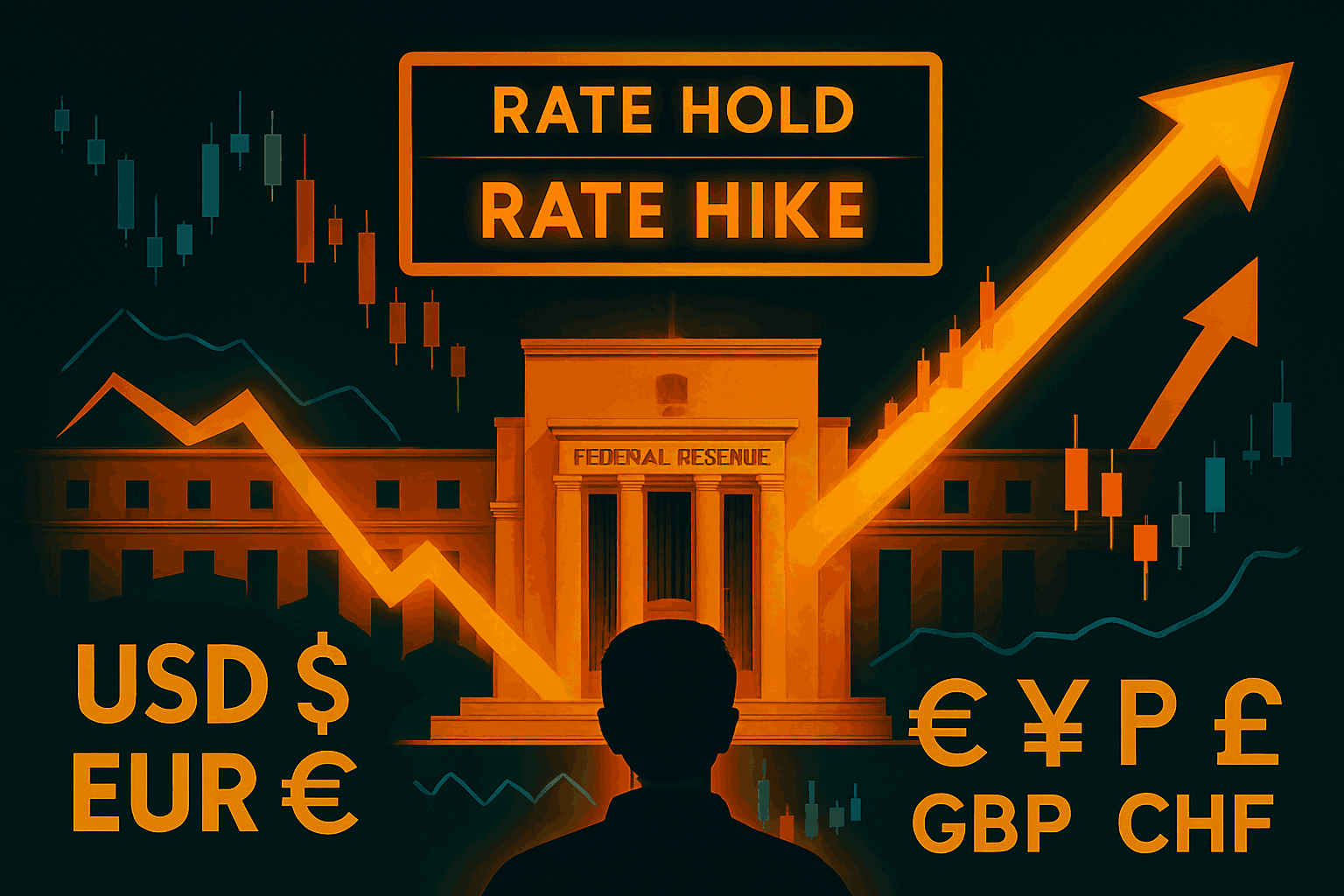
In the forex market, few events command as much attention as a Federal Reserve interest rate decision. The Fed’s interest rate decisions influence not just the US dollar but ripple through the entire global currency landscape. For traders, understanding how these Fed interest rate decisions impact major currency pairs can be the difference between capturing big moves and getting caught on the wrong side of the market
Why the Fed’s Interest Rate Decisions Matter
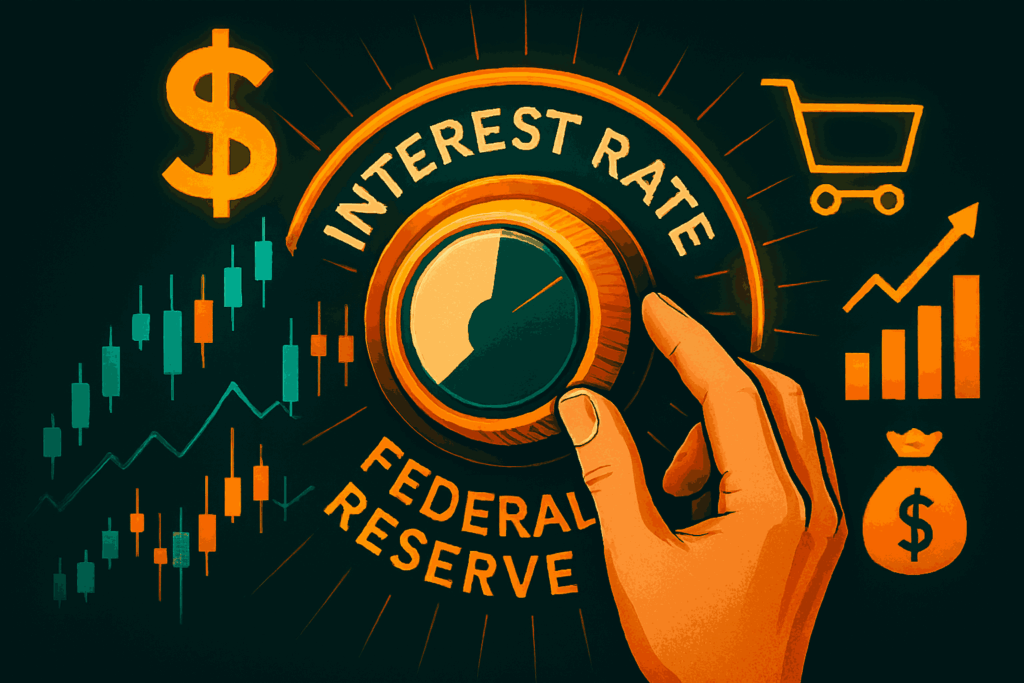
The Federal Reserve sets the benchmark interest rate for the US, affecting borrowing costs, consumer spending, business investment, and ultimately, the value of the dollar.
When the Fed raises rates, it generally strengthens the USD because higher interest rates attract foreign capital seeking better returns. Conversely, when the Fed cuts rates, the USD often weakens as yields decline.
Impact on Major Currency Pairs
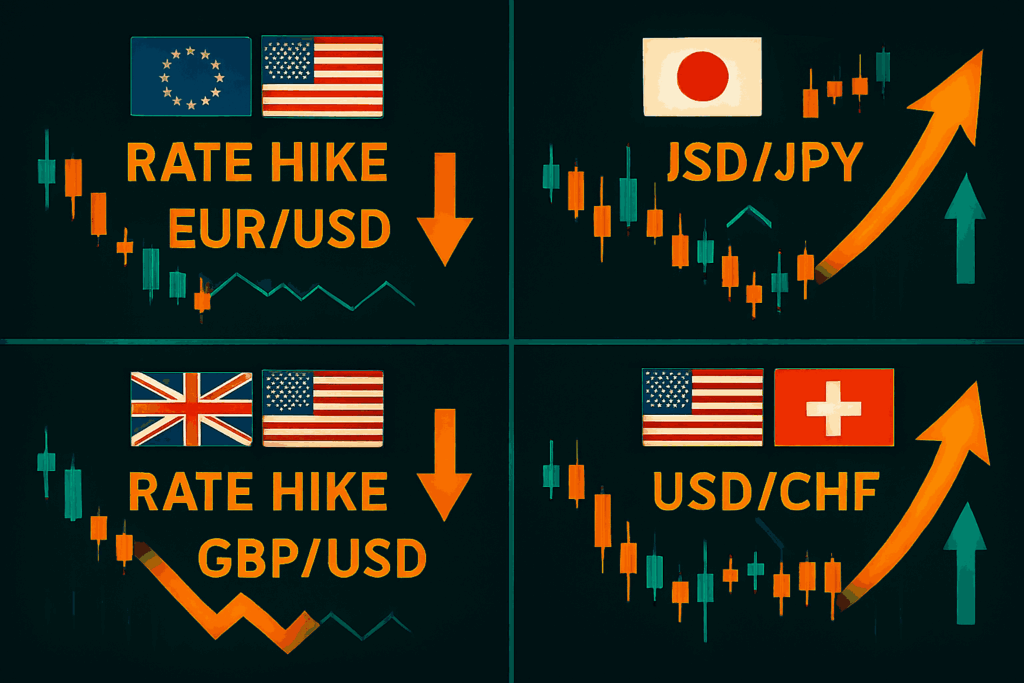
- EUR/USD
The euro-dollar pair is the most traded in the world, making it highly sensitive to Fed policy. A rate hike can push EUR/USD lower as USD demand increases, while a rate cut often leads to a rise in EUR/USD if the European Central Bank’s policy remains unchanged. - USD/JPY
USD/JPY responds strongly to interest rate differentials between the US and Japan. The Bank of Japan’s historically low rates mean Fed hikes can cause USD/JPY to surge, while cuts can trigger sharp drops as yield spreads narrow. - GBP/USD
This pair is influenced by both Fed and Bank of England policies. If the Fed raises rates while the BoE holds steady, GBP/USD can fall sharply. However, if the BoE is more aggressive than the Fed, the pound may strengthen. - USD/CHF
Safe-haven flows can complicate this pair’s reaction. In normal conditions, Fed hikes boost USD/CHF, but in times of market stress, the Swiss franc may strengthen regardless of Fed policy.
Other Influences Beyond the Decision
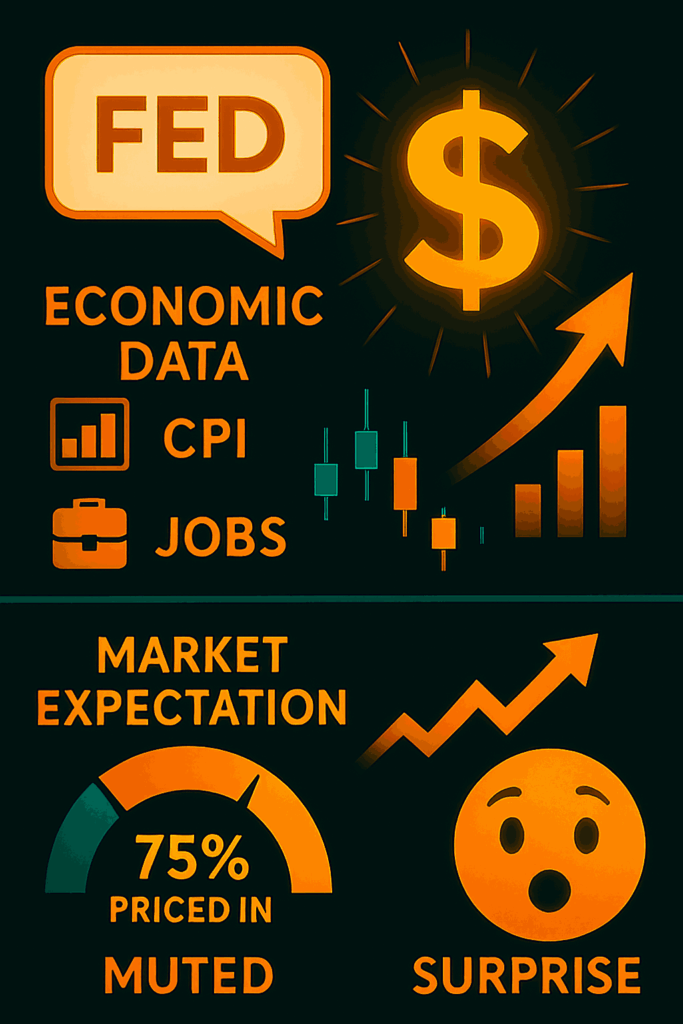
- Forward Guidance: The Fed’s statements about future policy often move markets more than the actual rate change.
- Economic Data: Inflation reports, employment numbers, and GDP growth influence how markets interpret Fed actions.
- Market Expectations: If a rate change is fully priced in, the market reaction may be muted. Surprise moves tend to cause the biggest swings.
Trading Strategies Around Fed Decisions
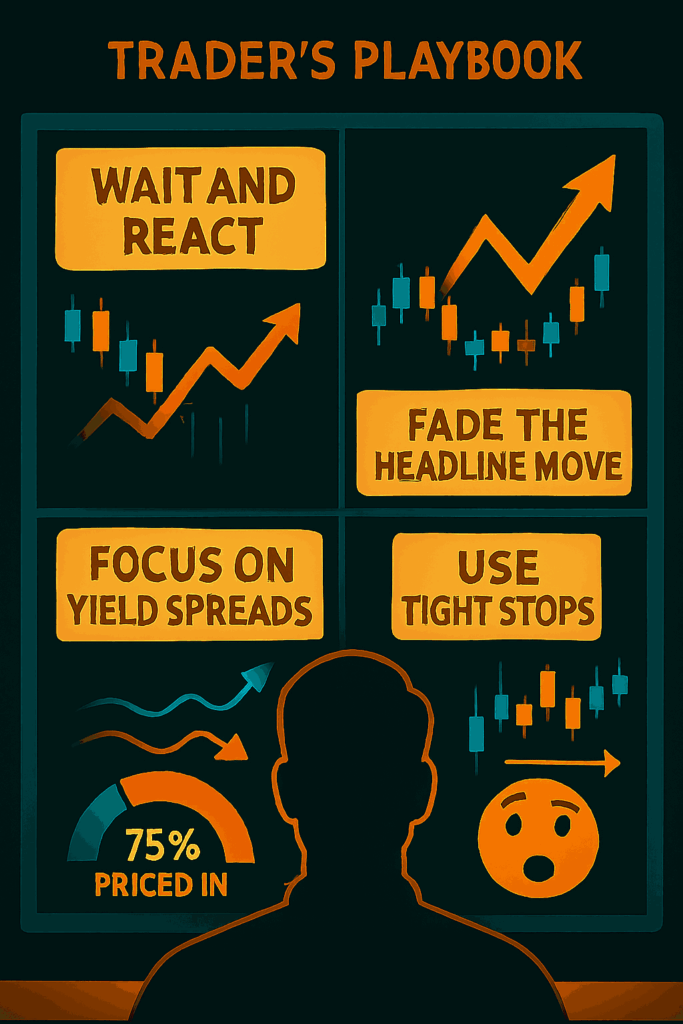
- Pre-Announcement Positioning
Many traders avoid taking large positions before the decision due to the risk of volatility spikes. Instead, they wait for the Fed statement and market reaction. - Fade the Initial Move
Sometimes the market overreacts to the headline, creating opportunities to trade in the opposite direction once the dust settles. - Focus on Interest Rate Differentials
Compare US rates with other major economies to identify which pairs are likely to move the most. - Use Tight Risk Controls
Stop-loss orders are critical when trading around Fed days, as price swings can be sudden and sharp.
Historical Examples
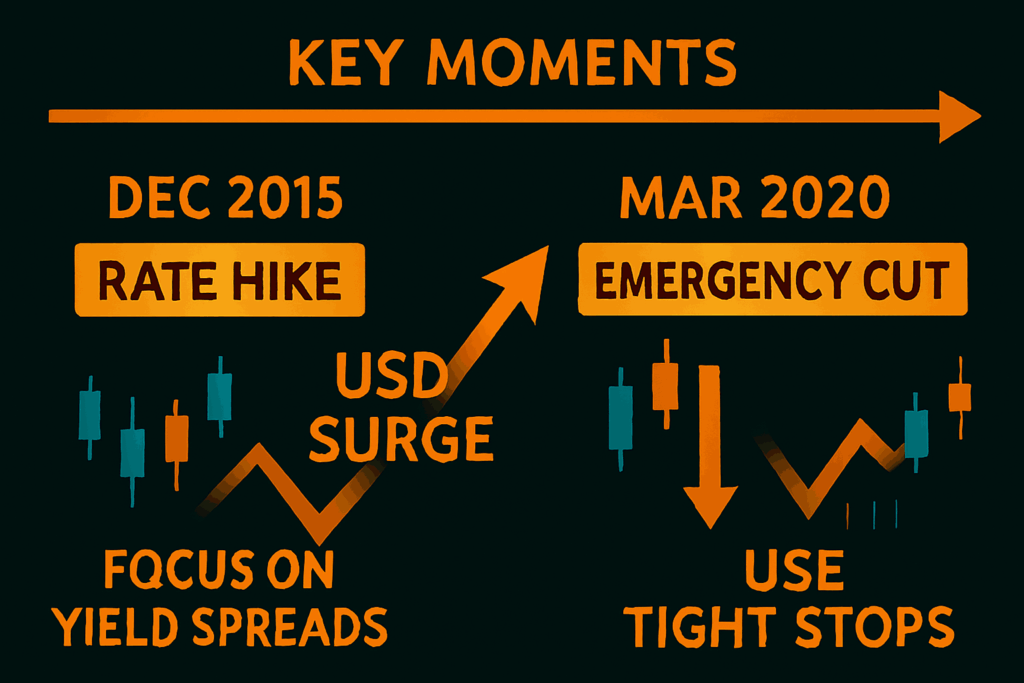
- December 2015: The Fed’s first hike in nearly a decade pushed USD higher across the board.
- March 2020: Emergency rate cuts to near zero during the pandemic caused a sharp USD sell-off initially, followed by a recovery as liquidity demand soared.
Final Thoughts
The Fed’s interest rate decisions are among the most influential events in forex trading. They shape USD trends, impact every major currency pair, and can generate high volatility. By understanding the mechanics and market psychology behind these moves, traders can navigate Fed days with more confidence and potentially capitalize on the opportunities they present.