Every few weeks, traders and analysts worldwide turn their attention to a seemingly routine event the release of the Fed Meeting Minutes. While these documents may not have the headline-grabbing appeal of an interest rate decision, they often trigger sharp moves in the US dollar and other major currencies. The reason is simple: the Fed Meeting Minutes offer a deeper, more nuanced look into the Fed’s thinking than the initial policy statement or press conference.
What Are the Fed Meeting Minutes?
The Federal Open Market Committee (FOMC) meets eight times a year to set monetary policy. About three weeks after each meeting, the Fed releases minutes a detailed account of the discussions, debates, and considerations that shaped the final decision.
These minutes can reveal:
- Divergence of views among policymakers.
- Concerns about economic risks not highlighted in official statements.
- Hints about future policy direction that weren’t explicit on decision day.
Why the Minutes Matter to Forex Markets
The forex market is forward-looking. Traders are constantly adjusting their positions based on expectations of future interest rates, inflation, and economic growth. The Fed minutes can alter those expectations by:
- Providing Policy Clarity
Even if the official statement is brief, the minutes may explain why certain language was chosen and what specific risks the Fed is watching. - Revealing Internal Divisions
If several members pushed for a more aggressive stance or a more cautious approach traders may revise their forecasts for the next meeting. - Updating Economic Outlooks
Discussion of new data, inflation pressures, or labor market trends can influence how markets price USD movements.
How the Release Can Trigger Volatility
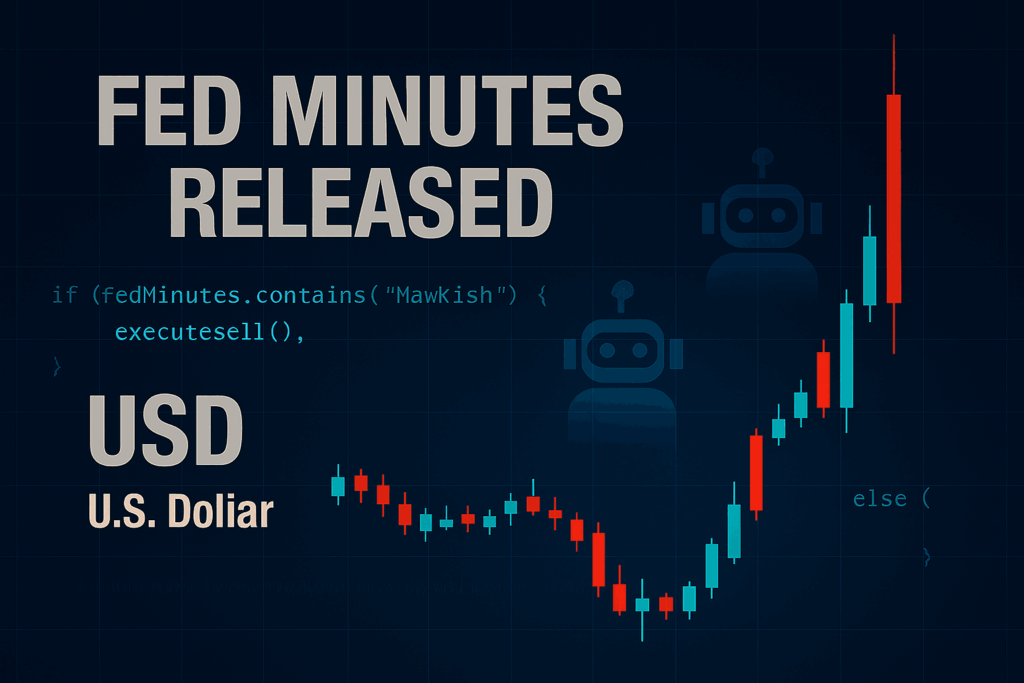
When the minutes are more hawkish than markets expected, the USD can rally as traders anticipate higher interest rates. Conversely, a more dovish tone can weaken the dollar as expectations shift toward slower tightening or potential rate cuts.
Volatility often spikes because:
- The minutes sometimes contain fresh insights not mentioned in press conferences.
- High-frequency trading algorithms scan the text instantly, executing large orders based on key phrases.
- Traders positioned one way ahead of the release may scramble to exit or reverse trades if the tone surprises them.
Historical Examples of Minute-Driven Moves
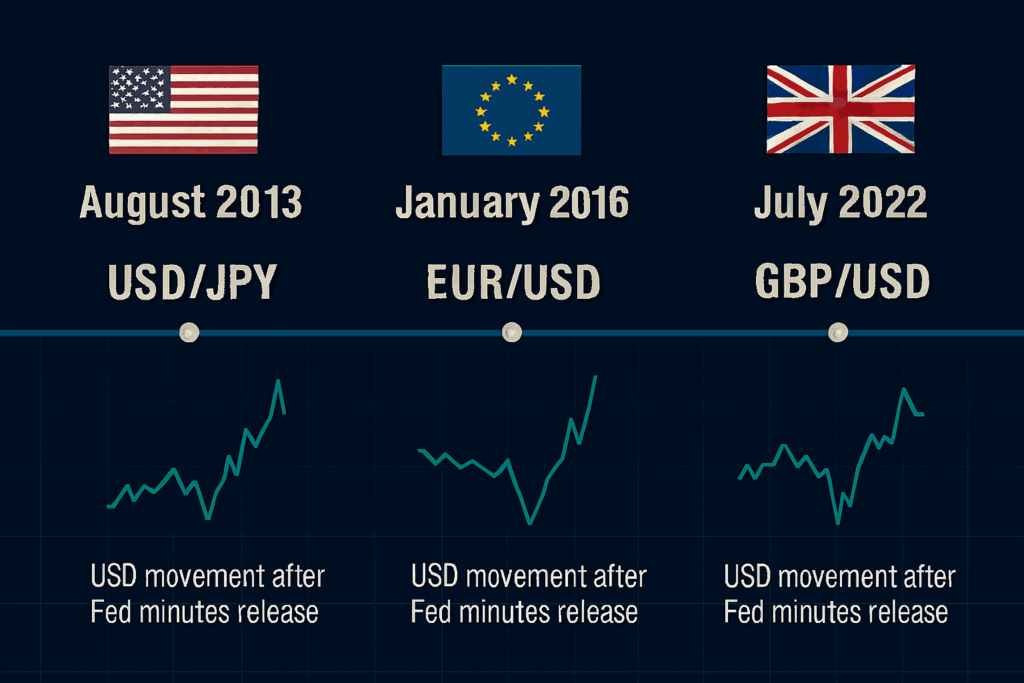
- August 2013: The minutes hinted at a sooner-than-expected tapering of quantitative easing, sending USD higher against major pairs.
- January 2016: Concerns about global growth risks caused a dovish tone, pushing USD lower as rate hike expectations were scaled back.
- July 2022: A strong focus on fighting inflation reinforced hawkish expectations, boosting USD across the board.
Trading Strategies for Fed Minutes
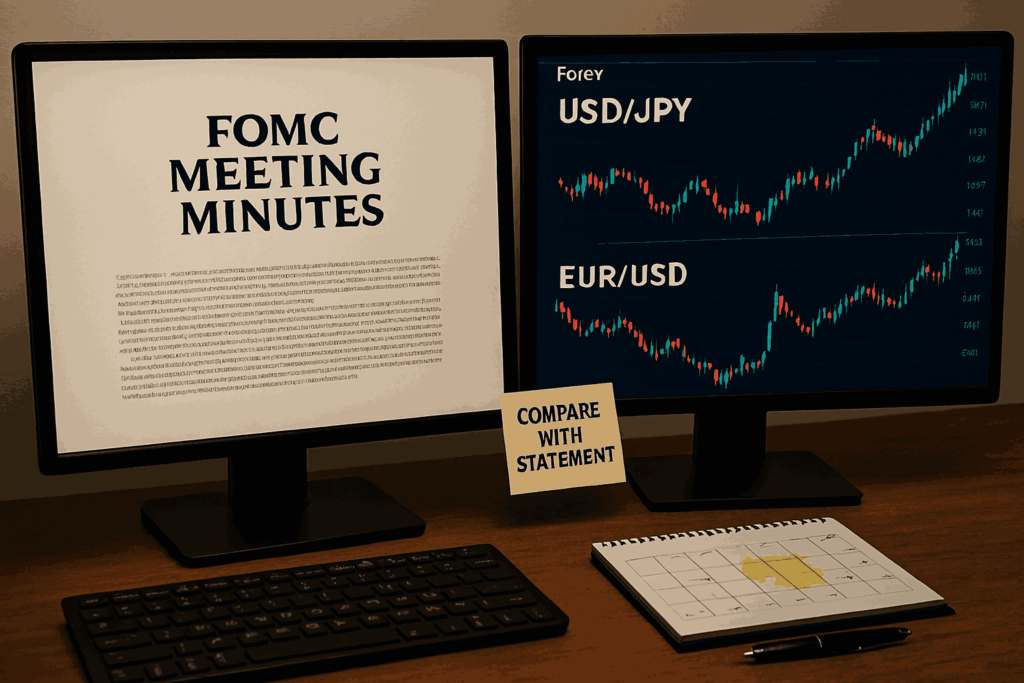
- Compare with the Statement
Traders should note differences between the initial meeting statement and the minutes. If the minutes sound more hawkish or dovish, it can signal potential market moves. - Check Market Positioning
If the market is heavily tilted toward one expectation, even a small surprise in tone can cause an outsized reaction. - Trade the Aftermath, Not the Release
Price action immediately after the minutes drop can be chaotic. Waiting for a confirmed direction often reduces whipsaw risk. - Focus on Sensitive Pairs
USD/JPY, EUR/USD, and GBP/USD are typically the most reactive to Fed minutes, but emerging market currencies can also see sharp moves.
Risks in Trading the Minutes
- Delayed Context: The minutes reflect discussions from three weeks earlier conditions may have shifted since then.
- Market Overreaction: Sometimes traders latch onto a single phrase without considering the broader message.
- Data Dependence: New economic releases can quickly override whatever signal the minutes send.
Final Thoughts
The Fed meeting minutes might not carry the immediate weight of an interest rate decision, but their ability to reshape market expectations makes them a powerful catalyst for USD volatility. For traders, the key is to treat them as a detailed map of the Fed’s thinking not a final destination. By comparing them against current market expectations and other economic indicators, traders can better navigate the rapid price swings that often follow their release.