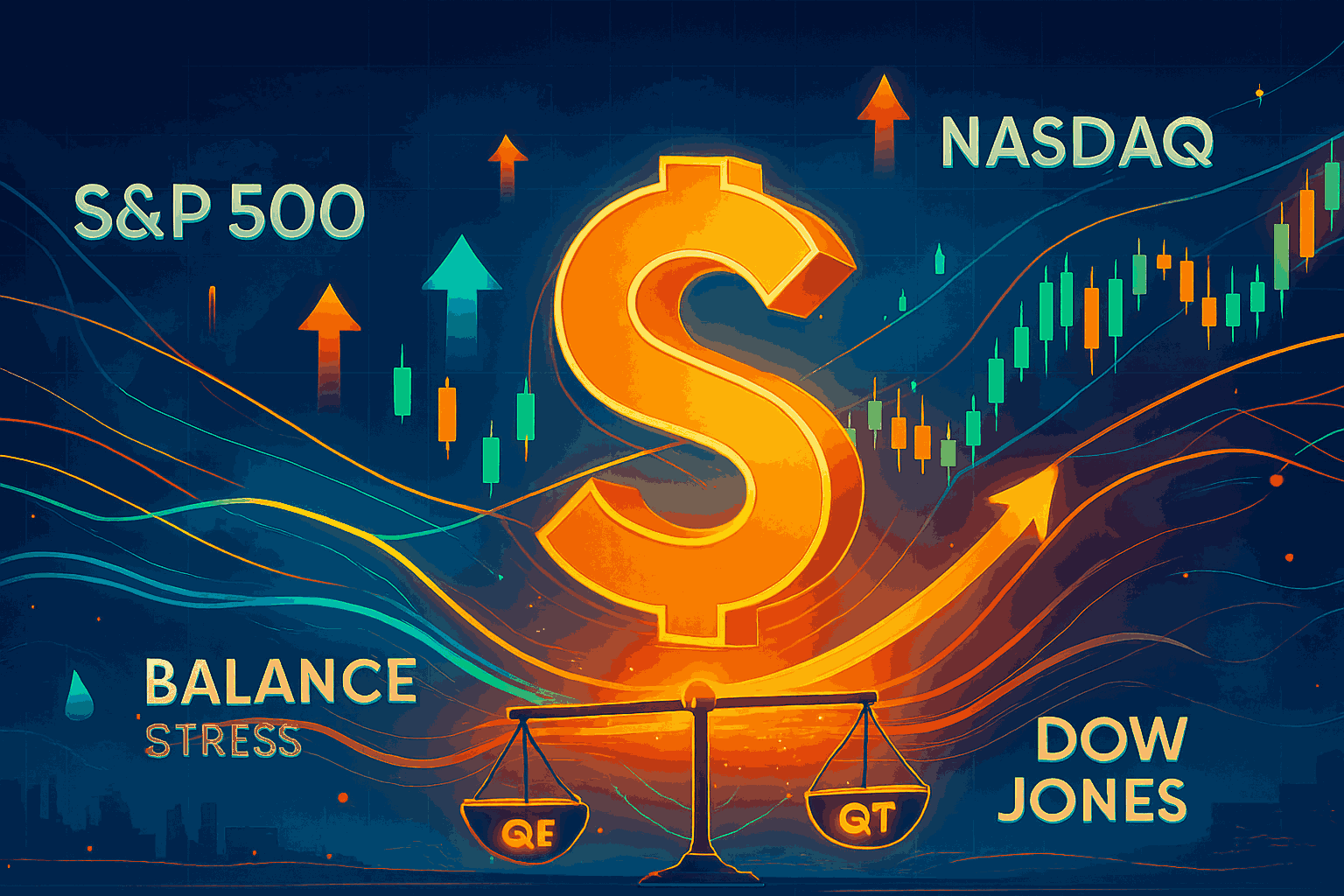
The relationship between US Equities and the Dollar is a dynamic link that forex traders closely watch. While both markets respond to economic data, corporate earnings, and global risk sentiment, their correlation is not fixed sometimes they move in the same direction, and at other times, in opposite ways.
Understanding this connection can help traders anticipate shifts in USD strength, manage risk, and find opportunities when stock market trends and currency moves align.
Why US Equities Matter for the Dollar
The United States is home to the world’s largest and most influential stock markets, including the S&P 500, Dow Jones Industrial Average, and Nasdaq. These markets act as a barometer for investor confidence in the US economy. Since the USD is the world’s primary reserve currency, shifts in equity market sentiment often influence global capital flows and, in turn, the dollar’s performance.
Risk-On vs. Risk-Off Dynamics
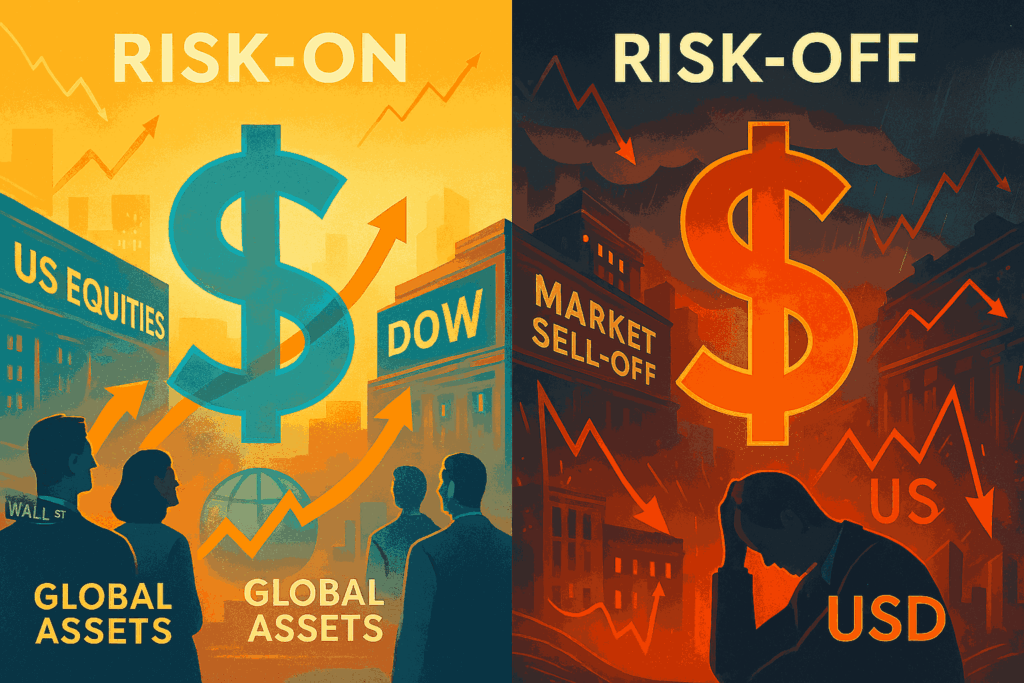
The risk-on/risk-off framework is central to understanding the USD–equities connection:
- Risk-On: When US equities rally, it often signals investor confidence in economic growth. This can lead to capital flowing into higher-yielding assets worldwide, sometimes weakening the USD as investors seek opportunities abroad.
- Risk-Off: When equities fall sharply, investors often rush to safety and the USD benefits from its safe-haven status. This “flight to quality” can boost USD demand even if the US economy is facing challenges.
Interest Rates as the Bridge
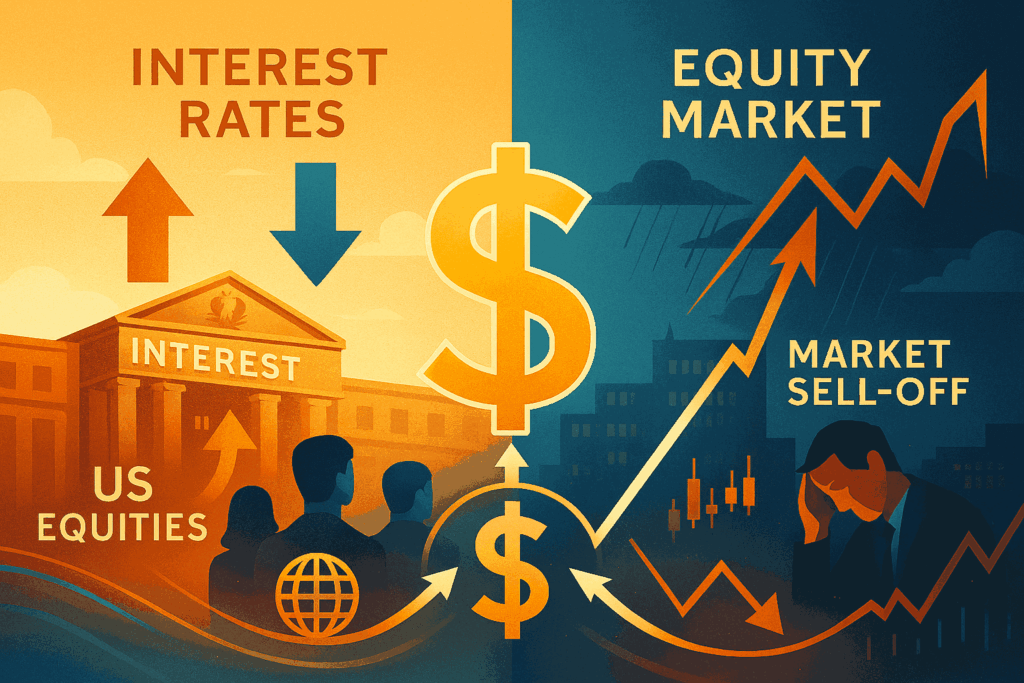
The Federal Reserve’s interest rate policy plays a crucial role in linking equities and the USD.
- Higher interest rates can strengthen the USD by attracting foreign investment into US assets but may weigh on equity valuations due to higher borrowing costs.
- Lower interest rates often support equities by making financing cheaper but can weaken the USD as yield differentials with other currencies shrink.
For example, during periods when the Fed signals aggressive rate hikes, the USD may rise while equities pull back illustrating an inverse relationship.
Foreign Investment Flows
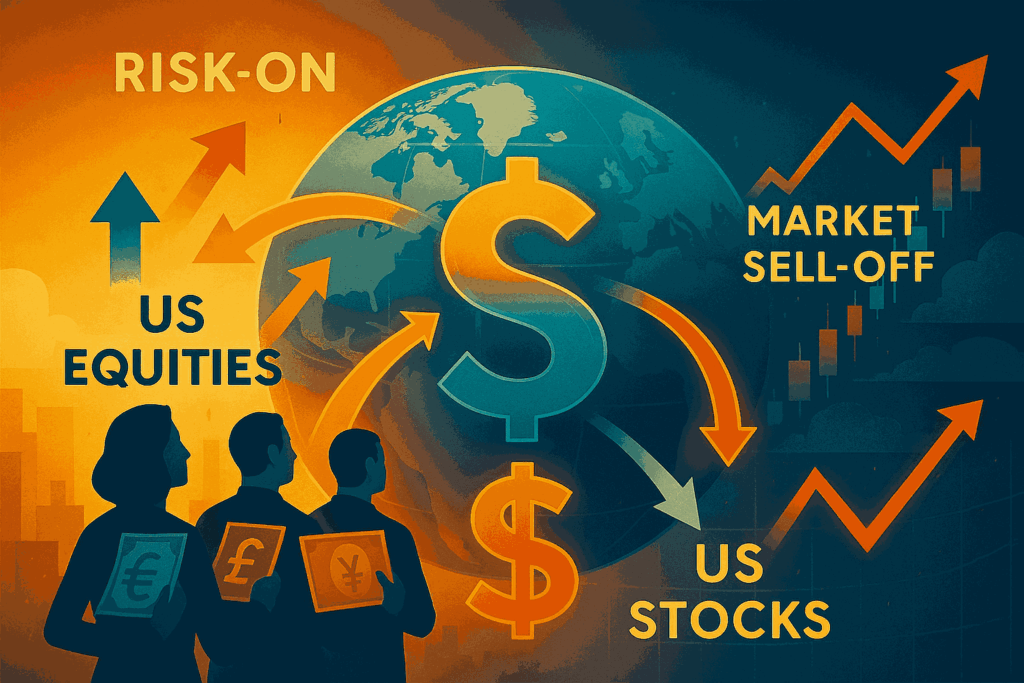
The US stock market attracts significant investment from abroad. To buy US equities, foreign investors must first purchase USD, which can temporarily strengthen the currency. Conversely, if overseas investors sell US stocks, the reverse transaction can weaken the dollar.
During major bull markets in equities especially when the rally is led by sectors with strong global appeal like technology foreign capital inflows can support the USD.
Periods of Positive Correlation
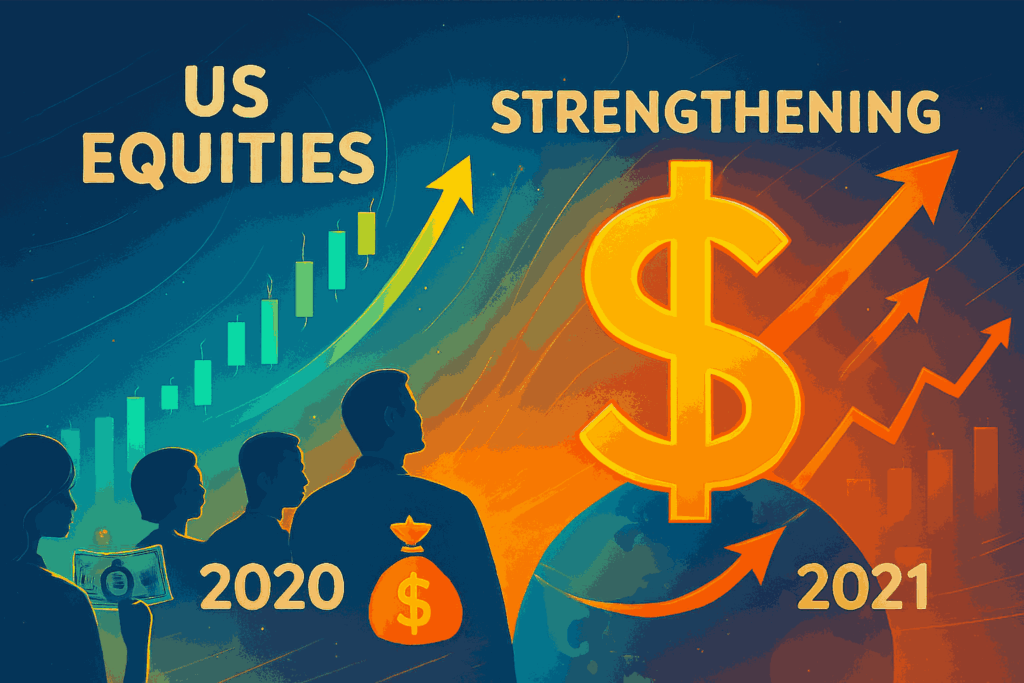
While often inverse, there are times when equities and the USD rise together. This can occur when:
- The US economy outperforms other major economies.
- Strong corporate earnings attract both domestic and foreign investment.
- Global uncertainty boosts both safe-haven USD demand and the relative appeal of US assets.
A notable example was parts of 2020–2021, when stimulus measures and rapid recovery expectations lifted both the stock market and the dollar.
Trading Implications

For forex traders, monitoring US equities offers valuable clues about USD direction:
- Track equity indexes S&P 500 moves often lead shifts in risk sentiment.
- Watch Fed policy changes in rate expectations can impact both markets simultaneously.
- Look for divergences if equities rise but the USD falls, it may signal capital flowing out of the US.
Final Thoughts

The connection between US equities and the dollar’s performance is complex but offers rich insights for traders. By understanding how investor sentiment, Fed policy, and global capital flows intertwine, market participants can better anticipate currency moves.
Whether the relationship is positive or inverse depends on the broader economic and geopolitical backdrop but one thing remains constant: major shifts in US equities rarely happen without leaving their mark on the dollar.