
The Gold and USD Correlation is one of the most closely watched relationships in global markets. Traditionally, gold and the US dollar (USD) move in opposite directions: when the USD strengthens, gold often weakens, and vice versa. However, Wall Street plays a significant role in influencing and sometimes disrupting this correlation.
Understanding how investment banks, hedge funds, and large institutional players operate in gold and currency markets can provide traders with an edge when anticipating shifts in the gold–USD dynamic.
Why Gold and the USD Are Inversely Correlated
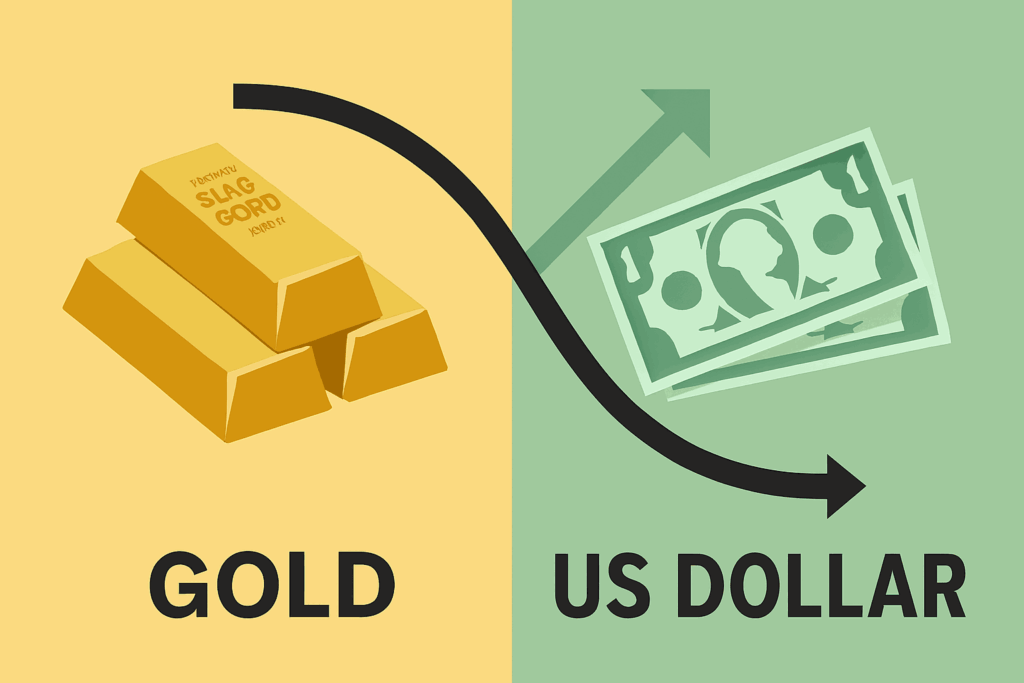
Gold is priced globally in US dollars. When the USD rises, gold becomes more expensive for foreign buyers, often leading to reduced demand and lower prices. Conversely, a weaker USD makes gold cheaper internationally, boosting demand.
Beyond pricing mechanics, gold is also viewed as a safe-haven asset a store of value during economic uncertainty while the USD enjoys similar status due to its role as the world’s primary reserve currency. This creates a push–pull dynamic where investors often choose between the two depending on market sentiment.
Wall Street’s Influence

- Institutional Positioning
Large investment banks and hedge funds often hold substantial positions in both gold futures and USD-related instruments. Their strategies driven by macroeconomic analysis, risk models, and speculative opportunities can create short-term volatility in both assets. - Cross-Market Arbitrage
Sophisticated trading desks at Wall Street firms engage in arbitrage strategies between gold, currency pairs like EUR/USD, and Treasury yields. These moves can temporarily distort the usual inverse correlation. - ETF and Fund Flows
Exchange-traded funds (ETFs) such as SPDR Gold Shares (GLD) attract billions in investor capital. Large inflows or outflows often influenced by Wall Street analyst calls or fund rebalancing can shift gold demand and indirectly affect USD sentiment.
When the Correlation Breaks Down
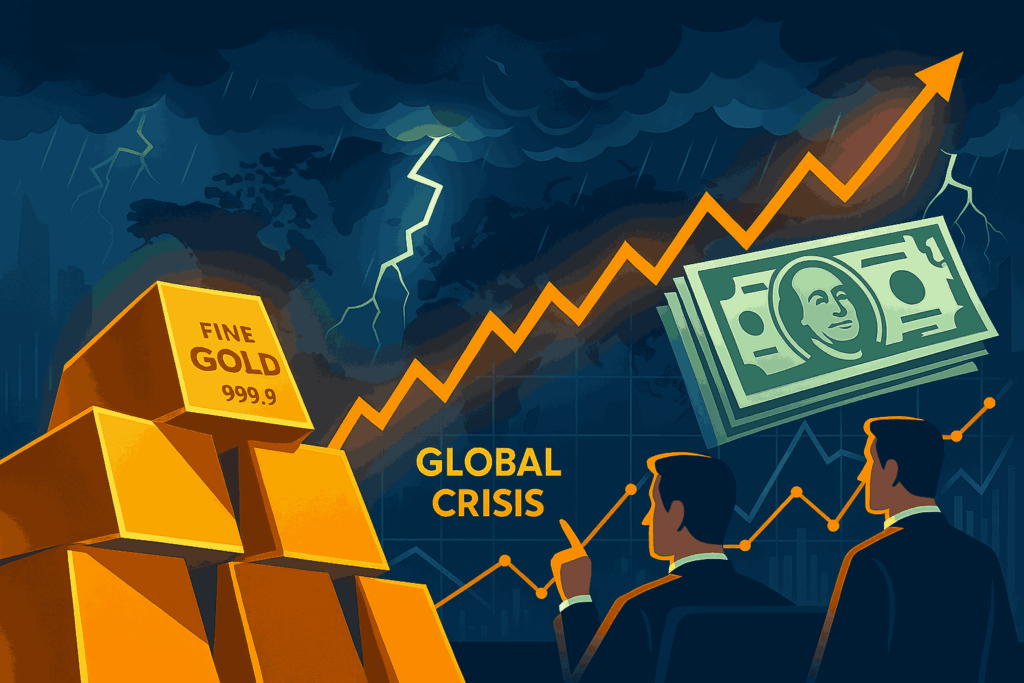
While gold and USD often move inversely, there are times when they rise together. These periods can occur during:
- Global crises where both gold and USD are sought as safe havens.
- Market stress prompting liquidations across risk assets, with investors holding both for protection.
- Strong US economic growth supporting the USD while inflation fears boost gold.
An example occurred in early 2020, when pandemic uncertainty drove simultaneous buying of gold and USD before the correlation reverted.
The Role of Interest Rates
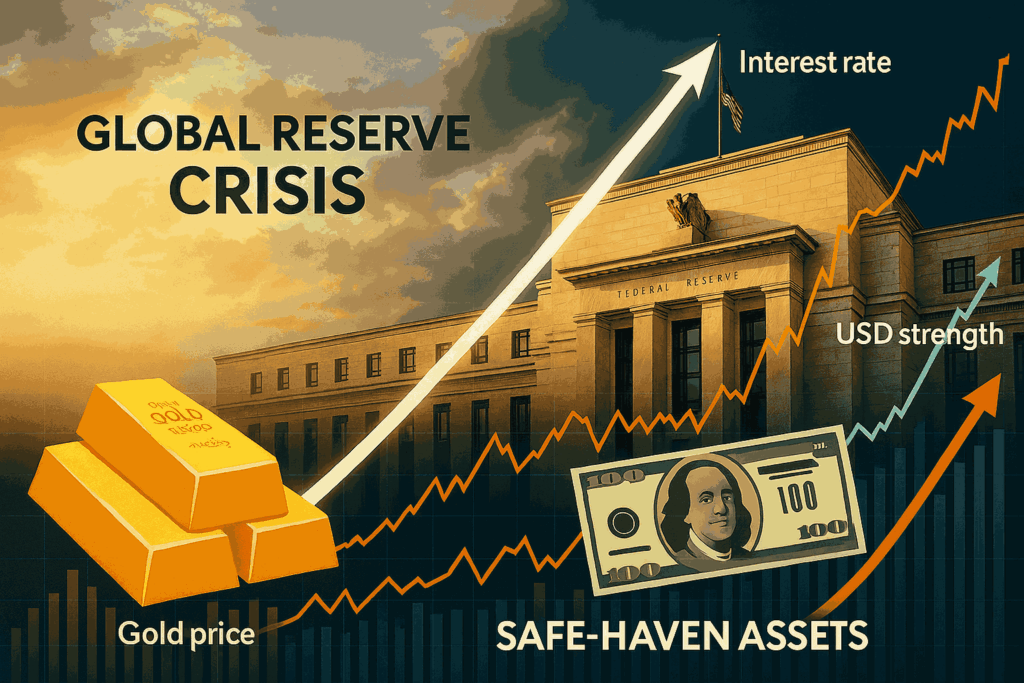
The Federal Reserve’s interest rate policy is a critical driver in the gold–USD relationship. Higher US interest rates can strengthen the USD by increasing yield attractiveness while weighing on gold, which pays no interest.
Wall Street traders watch Fed announcements closely, adjusting gold and USD positions in real time. This high-frequency response can lead to sharp, intraday price swings in both assets.
Trading Insights for the Gold–USD Dynamic
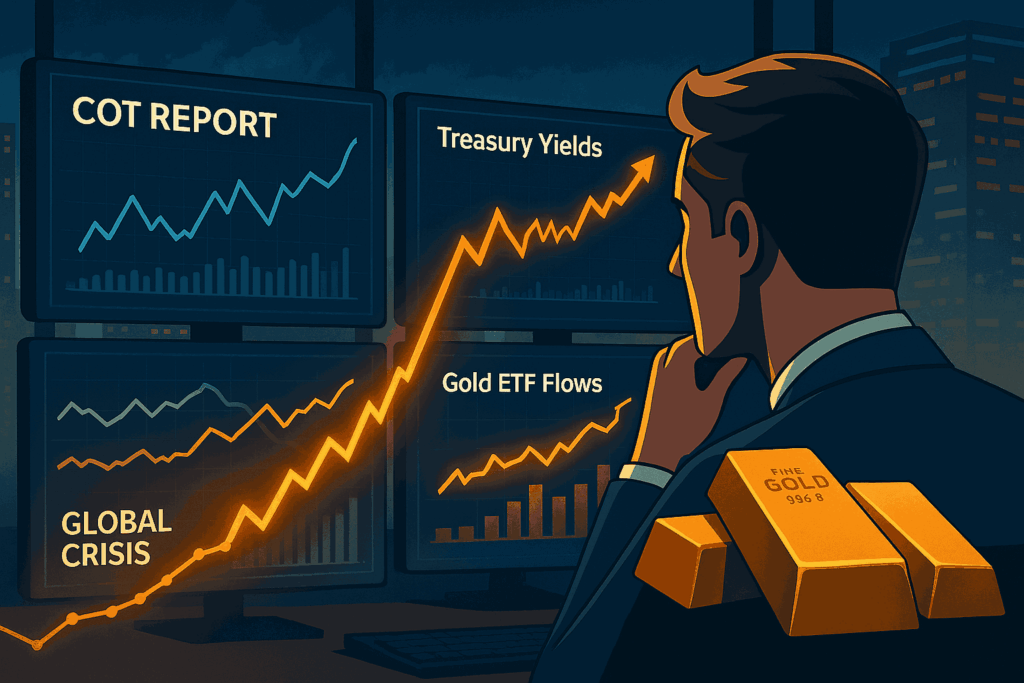
For traders looking to navigate this relationship effectively:
- Track Wall Street Positioning Data
The Commodity Futures Trading Commission (CFTC) publishes weekly Commitment of Traders (COT) reports showing large trader positioning in gold futures. - Watch Treasury Yields
Rising yields often support the USD and pressure gold, while falling yields can boost gold prices. - Monitor ETF Flows
Significant inflows or redemptions from gold ETFs can signal shifts in institutional sentiment. - Be Aware of “Safe Haven” Shifts
In risk-off scenarios, Wall Street often reallocates between gold and USD rapidly, creating sharp short-term moves.
Final Thoughts
Wall Street’s influence over the gold–USD correlation is powerful and multi-layered. While macroeconomic fundamentals explain the traditional inverse relationship, institutional trading activity, ETF flows, and interest rate expectations can lead to unexpected moves.
For forex and commodity traders, understanding not just the economic backdrop but also how big players on Wall Street operate can make the difference between staying ahead of the curve or being caught off guard.
By combining technical analysis with awareness of institutional flows, traders can better navigate the gold–USD interplay a relationship that continues to shape global markets.