
The US dollar is often seen as the anchor of the global financial system, acting as a benchmark for trade, investment, and currency valuation. While its movements against major currencies like the euro, yen, and pound receive most of the headlines, tracking the USD’s performance against emerging market (EM) currencies can offer traders a wealth of opportunities along with unique risks.
Emerging market currencies often respond to a different set of forces compared to major currencies, and the interplay with USD can highlight shifts in global economic momentum, commodity cycles, and investor sentiment.
Why Emerging Market Currencies Matter
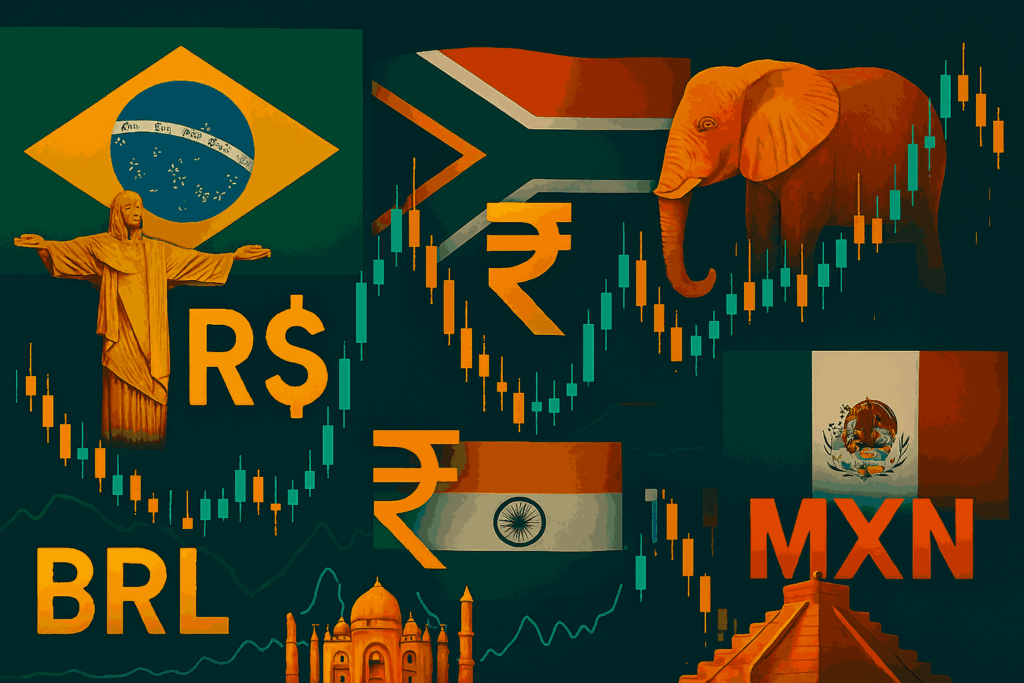
Emerging markets represent some of the fastest-growing economies in the world, from Brazil and South Africa to India and Mexico. Their currencies such as the Brazilian real (BRL), South African rand (ZAR), Indian rupee (INR), and Mexican peso (MXN) are more volatile than major currencies, which can create significant trading opportunities.
For traders, this volatility can be a double-edged sword: larger price swings can produce outsized gains but also lead to rapid losses if risk is not managed carefully.
Key Factors Driving USD vs EM Currency Moves
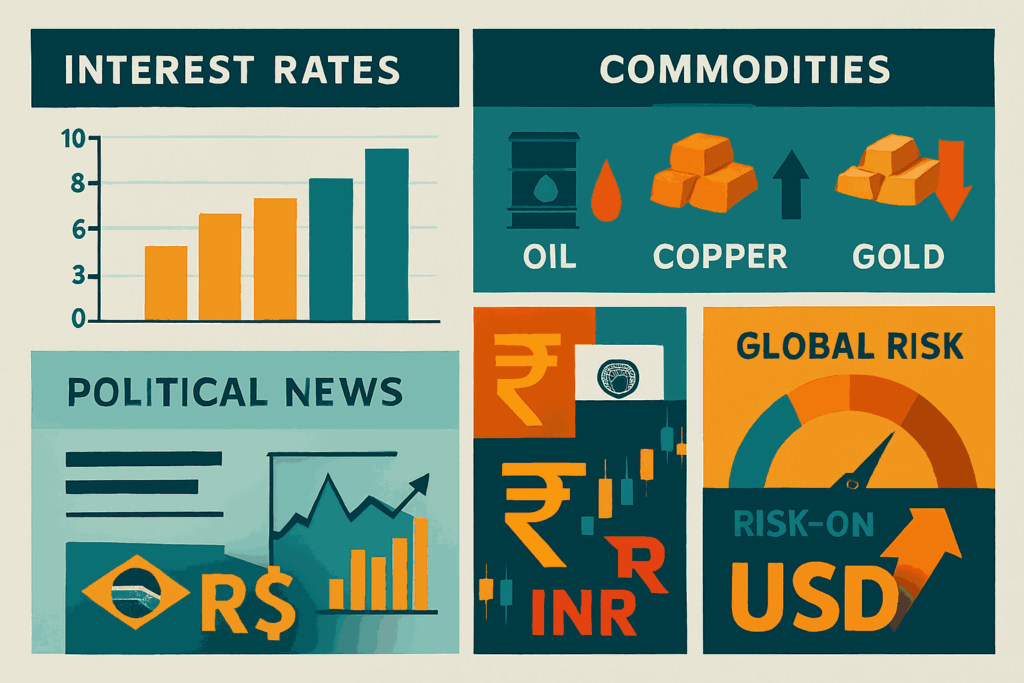
- Interest Rate Differentials
Higher interest rates in EM countries can attract foreign capital, strengthening local currencies against USD. Conversely, rate cuts or inflation concerns can weaken EM currencies, boosting USD performance. - Commodity Price Trends
Many emerging markets rely heavily on commodity exports. For example, rising oil prices can strengthen the Russian ruble (RUB) or Mexican peso, while falling prices may hurt them. Similarly, gold prices often influence the South African rand. - Global Risk Sentiment
EM currencies tend to perform well during “risk-on” periods when investors seek higher returns, and poorly during “risk-off” times when safety becomes a priority. In times of uncertainty, the USD often benefits as a safe-haven currency. - Local Political and Economic Stability
Elections, policy changes, corruption scandals, or social unrest in EM nations can cause sharp currency movements. - US Dollar Strength
A broadly strong USD, driven by Federal Reserve policy or global capital flows, can pressure EM currencies across the board.
Opportunities for Traders

- Carry Trades
Some EM currencies offer high interest rates, creating opportunities for carry trades borrowing in low-yield currencies (like USD or JPY) and investing in high-yield EM currencies. However, these trades can unravel quickly if risk sentiment turns negative. - Commodity Correlations
Traders who understand commodity price cycles can anticipate EM currency moves. For example, a bullish outlook on copper might support the Chilean peso (CLP), while a bearish oil forecast could weaken the Nigerian naira (NGN). - Macro Trend Plays
Long-term economic reforms, infrastructure growth, or trade agreements can create sustained EM currency strength, offering medium- to long-term trading setups.
Risks to Consider
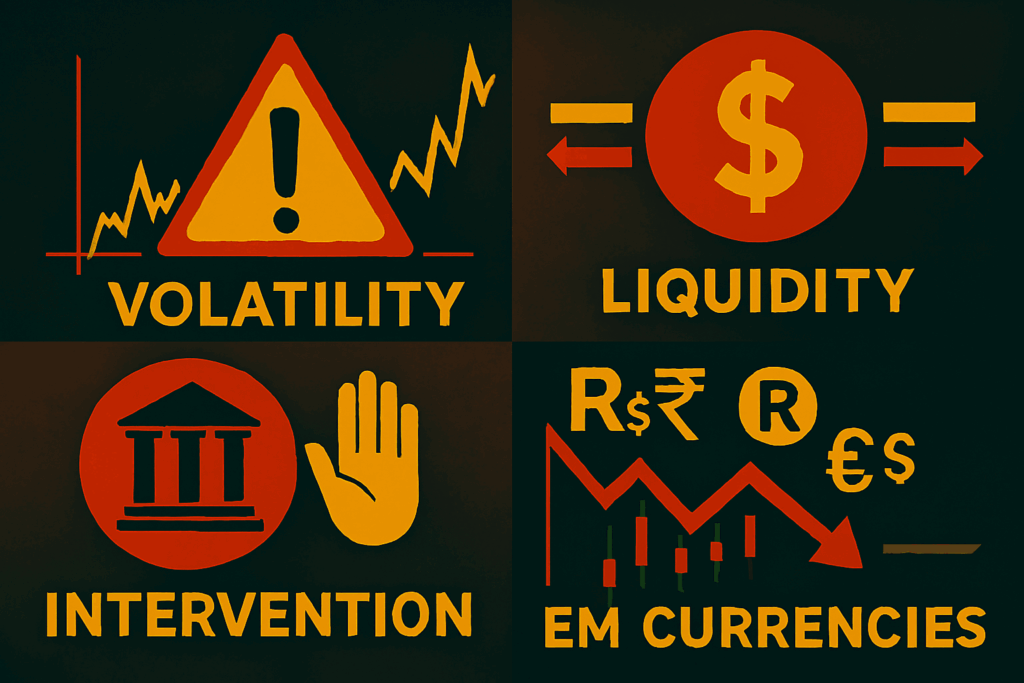
- Volatility Spikes
EM currencies can experience extreme intraday volatility, especially during political crises or global market shocks. - Liquidity Constraints
Some EM currency pairs have lower liquidity, which can lead to wider spreads and slippage. - Policy Interventions
Central banks in emerging markets sometimes intervene heavily in forex markets, causing unexpected reversals. - Correlation Risks
Many EM currencies move together during global shocks. Overexposure to multiple EM pairs can amplify losses.
Practical Tips for Trading USD vs EM Currencies

- Use Smaller Position Sizes: Reduce exposure to account for higher volatility.
- Stay Updated on Local News: Domestic events can move EM currencies more than global headlines.
- Watch the US Dollar Index (DXY): Broad USD strength or weakness often sets the tone for USD vs EM performance.
- Combine Technical and Fundamental Analysis: Use charts to time entries and exits, but rely on macro analysis for directional bias.
Final Thoughts
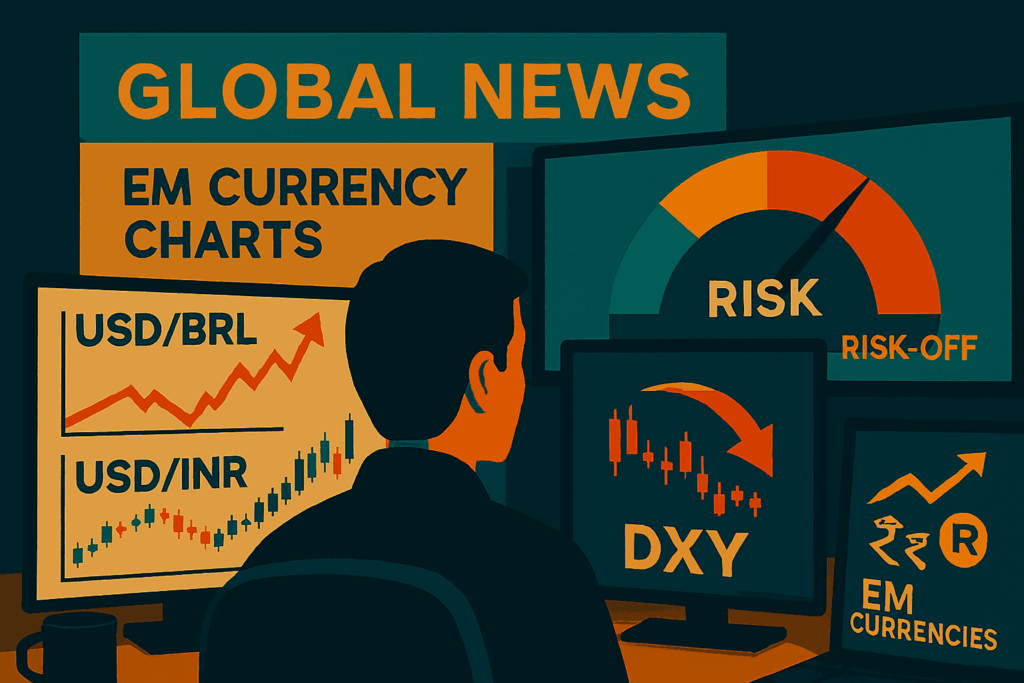
Trading USD against emerging market currencies can open the door to both exceptional opportunities and heightened risks. By understanding the unique drivers behind these pairs from commodity cycles to political stability traders can position themselves more strategically.
For those who manage risk well, the volatility of USD vs EM currencies can be an asset rather than a liability, offering some of the most dynamic trading opportunities in the forex market today.